


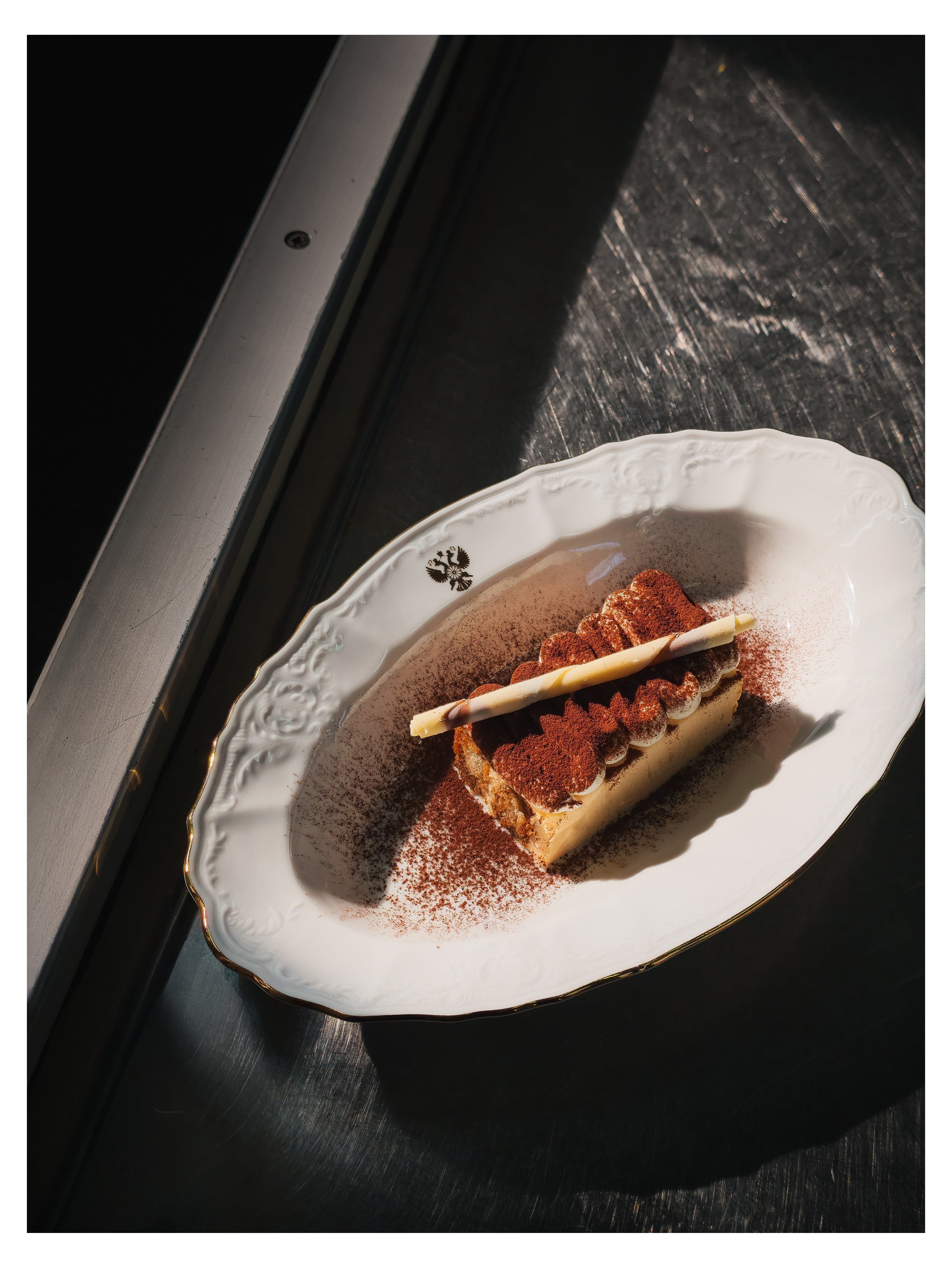
Koji Fermentation in Tiramisu: Why the Soak Matters
Tiramisu rests on three pillars: coffee, sweetness and alcohol. In this version, the coffee soak gains a fermented layer. We replace the water in the soak with coffee amazake, cold brew conditioned with koji rice.
The recipe was developed by Denis Pashkov and chef Irina Pashkova, co-author of the Fermentation in Desserts guide. The cream, the layering and the Luxardo Amaretto stay true to the classic. The change happens where the savoiardi absorb most of their flavor.
The result is a soak with its own enzymatic sweetness, a gentle umami depth and soft caramel notes. Coffee bitterness stops competing with sugar and blends into it.
How Koji Enzymes Sweeten Cold Brew
Coffee amazake is driven by enzymes, not by bacteria or yeast. Koji is steamed rice cultivated with Aspergillus oryzae, a domesticated mold. During growth, it fills the grain with enzymes that keep working long after the mold stops.
At 55 °C, three processes shape the soak:
Starch breakdown. Amylase and glucoamylase convert rice starch into glucose and maltose. Both taste less sweet than table sugar, so the sweetness stays round and never masks the coffee.
Protein breakdown. Proteases split rice proteins into amino acids, including glutamate. This adds umami and lengthens the roasted finish of the coffee.
Slow Maillard reaction. Over long, gentle heat, amino acids react with sugars and form melanoidins. They bring a light caramel note and a deeper color.
Cold brew works well as the base liquid. Its mild acidity sits within the range where koji amylases stay active. Its low bitterness lets the rice sweetness come through cleanly.
How to Give the Enzymes an Advantage
The goal is maximum enzyme activity with minimum microbial activity. A few controlled parameters make the difference:
Hold 55 °C. Koji amylases work efficiently here. Above 60 °C they start to denature; below 50 °C conversion slows and wild microbes gain ground.
Allow 9–10 hours. This gives the enzymes enough time to convert most of the available starch.
Keep the ratio at 1:1.3. One part koji rice to 1.3 parts cold brew by weight. The liquid extracts the sugars while staying concentrated enough to sweeten the soak.
Vacuum-seal. Full contact between rice and liquid, no evaporation, no oxidation of the coffee.
Strain, never blend. Blending releases starch and solids that make the soak cloudy and heavy. A gentle strain gives a clear liquid that the savoiardi absorb evenly.
Chill to 5 °C. Cold storage slows any remaining enzyme and microbial activity and keeps the flavor stable for up to 3 days.
Coffee Amazake Tiramisu Recipe
Yield: two 10 × 20 cm molds. Start the cold brew and the coffee amazake a day ahead.
1. Cold Brew
Ingredients
60 g coffee, coarsely ground (extraction base)
600 g cold filtered water (1:10 ratio)
Method
Combine the coffee and water in a jar.
Steep at 5 °C for 16 hours.
Strain through a paper filter.
Store at 5 °C. You need 410 g in total: 260 g for the amazake and 150 g for the soak.
2. Coffee Amazake
Ingredients
200 g koji rice (enzyme source)
260 g cold brew (base liquid, 1:1.3 ratio)
Method
Combine the koji rice and cold brew. Mix until all the grains are evenly hydrated.
Vacuum-seal the mixture in a bag.
Incubate sous vide at 55 °C for 9–10 hours. Alternatively, use a rice cooker on the “Keep Warm” setting.
Strain through a chinois without pressing or blending. Keep the liquid; it is the base of the soak.
Store at 5 °C for up to 3 days.
3. Soak
Ingredients
150 g cold brew (coffee base)
120 g strained coffee amazake (enzymatic sweetness and umami, replaces water)
85 g Luxardo Amaretto
Method
Combine all the ingredients.
Keep at 5 °C until assembly.