


The intersection of tradition and modern technicity is where the most profound culinary stories are written. This May, the cosmos society journeyed to the heart of Central Asia—Tashkent, Uzbekistan—to participate in the inaugural Open Air by Honey Murena Pass. Held across the atmospheric corridors of the Railway Museum and the progressive culinary space of Joydaman, this event was more than a festival; it was a laboratory for cross-cultural exchange between craftsmen from Tashkent, Almaty, and Dubai.
Our mission was clear: to showcase how the rigors of controlled fermentation can elevate local ingredients into products of uncompromising integrity—beverages and dishes that are technically complex yet fundamentally accessible to the palate.
The Synergy of the Honey Murena Ecosystem
Before diving into the vats and starters, one must understand the framework of this event. The Honey Murena Pass is not merely a loyalty program; it is a conceptual ecosystem designed to unite the city’s highest-quality projects. By integrating a seamless rewards system—offering up to 10% cashback and the ability to cover 15% of a bill with points—Honey Murena is fostering a community of conscious consumers and dedicated creators. The Open Air was the physical manifestation of this digital bridge, bringing together the city’s “pro” community for two days of unpretentious, high-level networking and gastronomic exploration.
The Joydaman Collaboration
Our collaboration with the Joydaman team—specifically Nikita Bezotosny and Ibrahim Erkaev—was a masterclass in shared technical vision. Together with them, Denis Pashkov transformed the Joydaman bar into a fermentation lab, focusing on four distinct liquid profiles that challenged the boundaries of the “craft soda.”
1. Authentic Sourdough Kvass
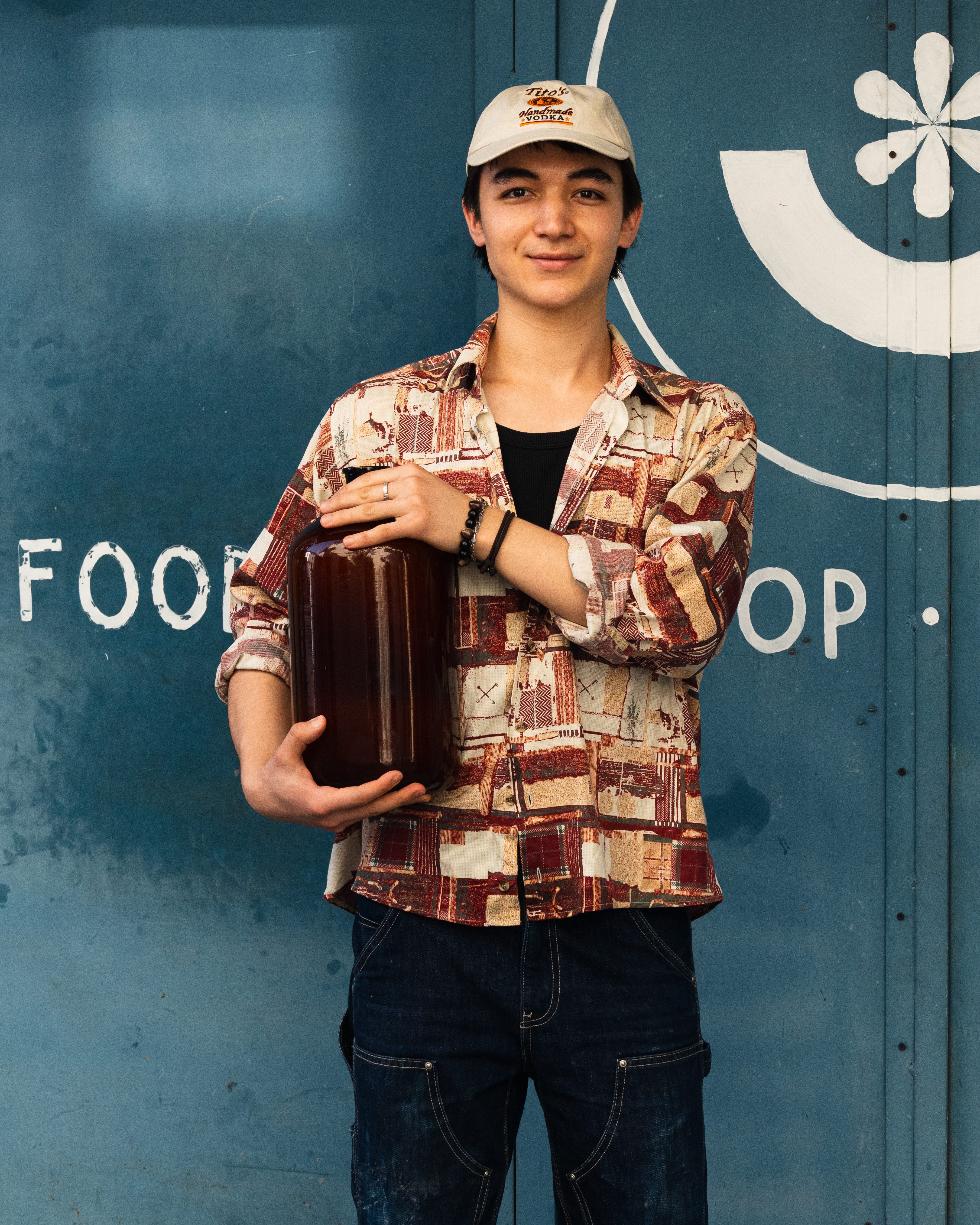
In a world of flavored soft drinks, we chose the path of genuine authenticity. This was not a syrup-based imitation but a true fermented kvass. Denis Pashkov utilized a mature sourdough starter to initiate a complex symbiotic fermentation. The lactobacilli from the sourdough provide a sharp, clean acidity that balances the deep, caramelized notes of the toasted local bread. This approach results in a beverage with a living probiotic profile and a structural integrity that industrial versions simply cannot replicate.
2. The Signature: “Strawberry & Cream” Kefir Whey Soda
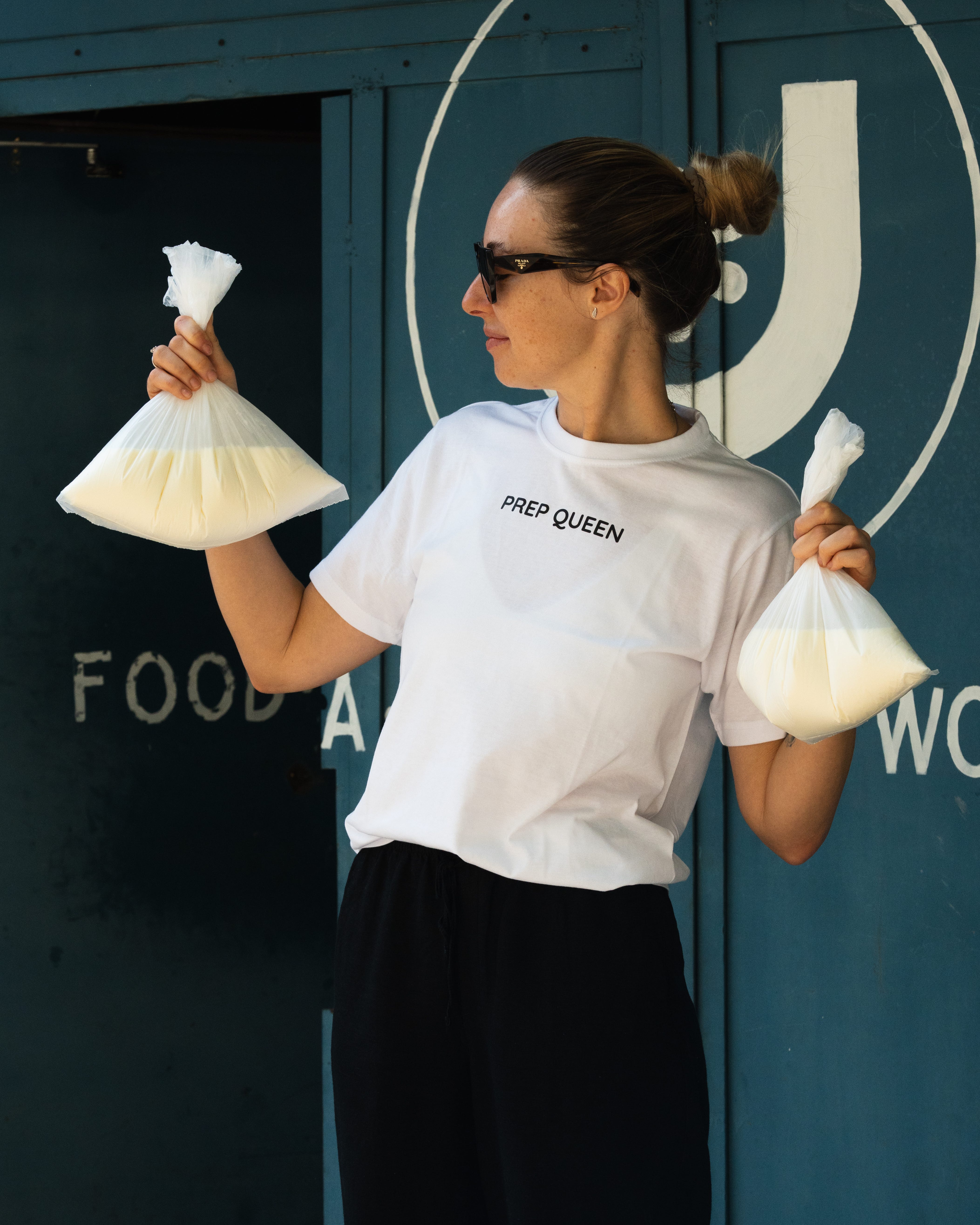
Perhaps the most technical beverage of the weekend was our signature lacto-fermented soda. The base is derived from kefir whey, a byproduct often overlooked but rich in minerals and active lactic acid bacteria. We used this whey to ferment local Uzbek strawberries and the almond-vanilla complexity of tonka beans. The fermentation process consumes the residual lactose and fruit sugars, producing a gentle effervescence and a creamy mouthfeel that mimics dairy without the weight. Bright, elegant, and deeply refreshing. At Joydaman we used raw milk that we got from a local farmer.
3. Ginger Bug Soda with Local Apricot
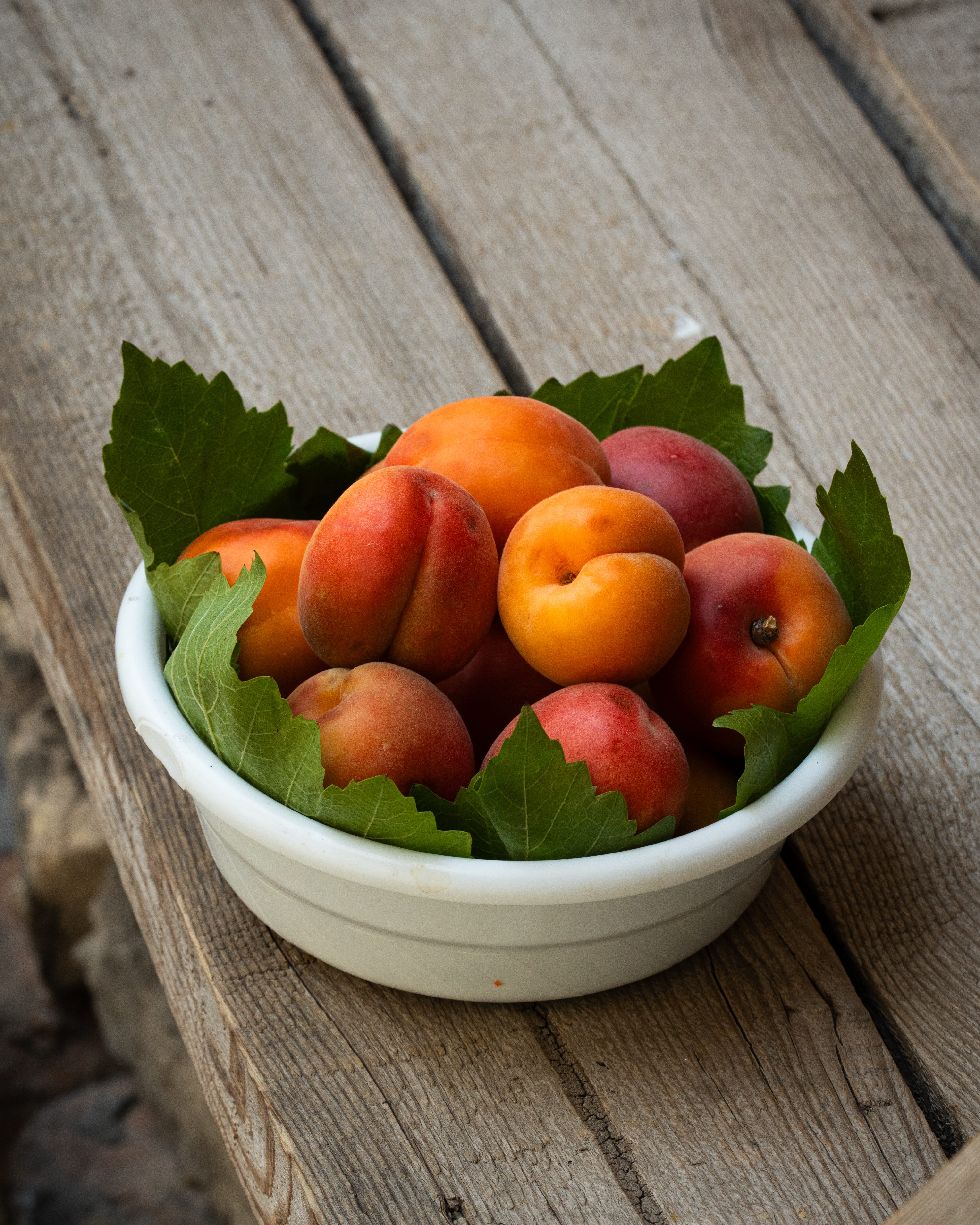
Uzbekistan’s terroir is world-renowned for its stone fruits. To honor this, we developed a soda based on a ginger bug (a wild-fermented ginger starter). We paired the spicy, proteolytic kick of the ginger with the honeyed density of local apricots. The ginger bug acts as the engine, driving the carbonation while the apricots provide the soul. The result is a vibrant, golden liquid that captures the essence of a Tashkent summer.
4. Koji Cultivation and Amazake
Beyond the immediate beverages, Denis Pashkov focused on cultivating koji (Aspergillus oryzae) on rice to produce amazake. This traditional Japanese fermentation technique, which converts rice starches into functional sugars, served as a foundational ingredient for our technical experiments, proving that the cosmos society philosophy is borderless, merging East Asian techniques with Central Asian ingredients.
5. Authentic Kisel and the Art of Fermentation in Desserts
A highlight of the gastronomic program was the revival of a forgotten Slavic staple: the fermented oat kisel. While Denis Pashkov managed the foundational fermentation processes, Pastry Chef Irina Pashkova took the lead on the culinary application, demonstrating how these ancient techniques can be modernized for high-end confectionery.
Irina Pashkova and Denis Pashkov are the co-authors of the definitive “Fermentation in Desserts” guide, and their work in Tashkent was a live demonstration of the principles found in their publication. To understand the beauty of traditional kisel, one must understand the biochemistry of the oat. Unlike modern starch-thickened drinks, this kisel was born from a long fermentation process.
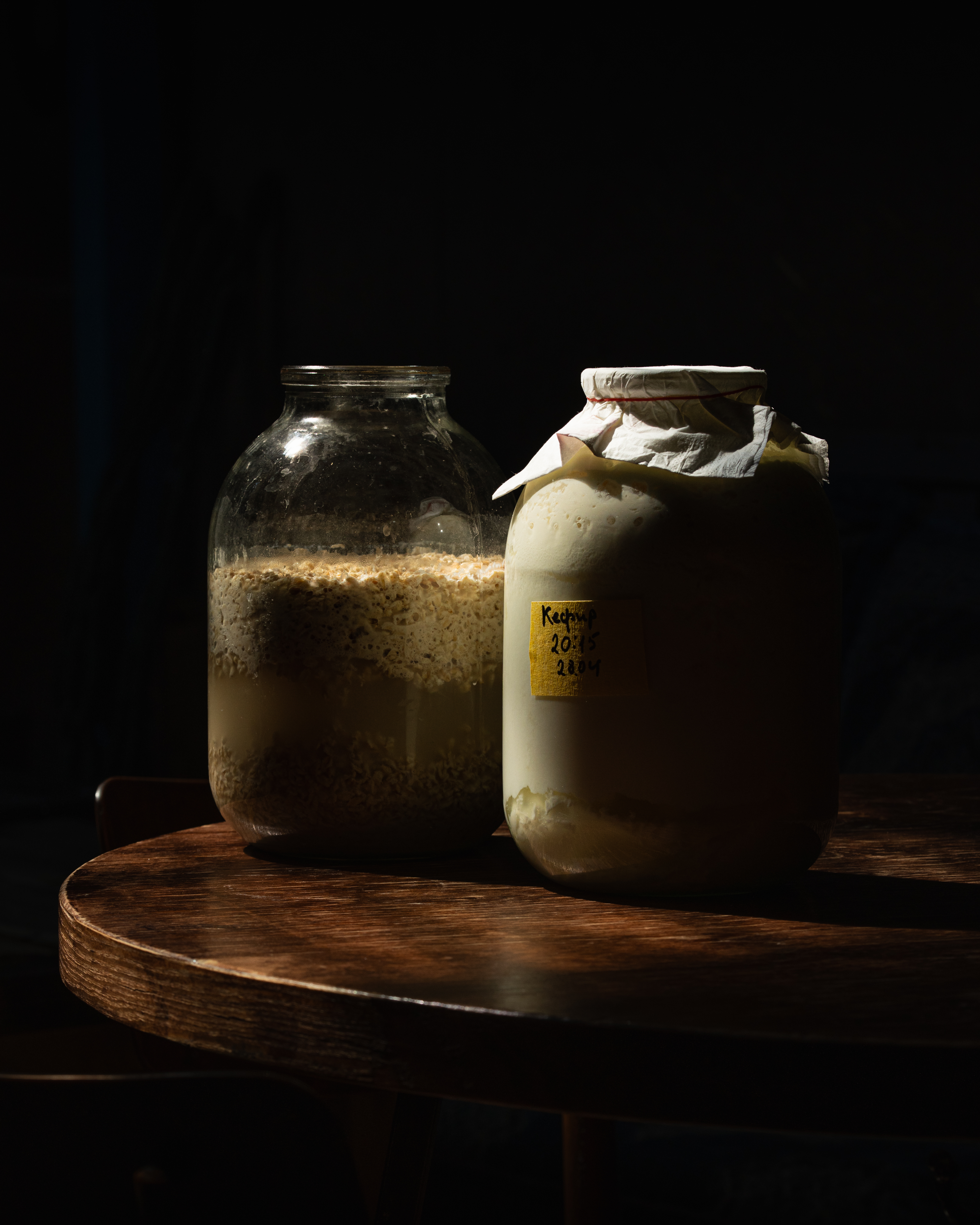
The Acidification Phase: Denis Pashkov allowed the oat and water mixture to ferment, letting lactic acid bacteria to convert the oat sugars into lactic acid. This provides a natural, sophisticated tang.
The Gelatinization Phase: During subsequent thermal processing, the remaining natural oat starches gelatinize. When cooled, this mass sets into a firm, nutrient-dense jelly—the “studen” (студень) our ancestors served as a primary meal.
The Silk Road Connection
The presence of Irina Pashkova in Tashkent was particularly significant. She had just finished implementing a bespoke dessert menu for Golden Eagle Luxury Trains while touring the Central Asian Silk Road. This experience of sourcing ingredients across nomadic routes and high-altitude terrains deeply informed her approach to the Open Air’s menu.
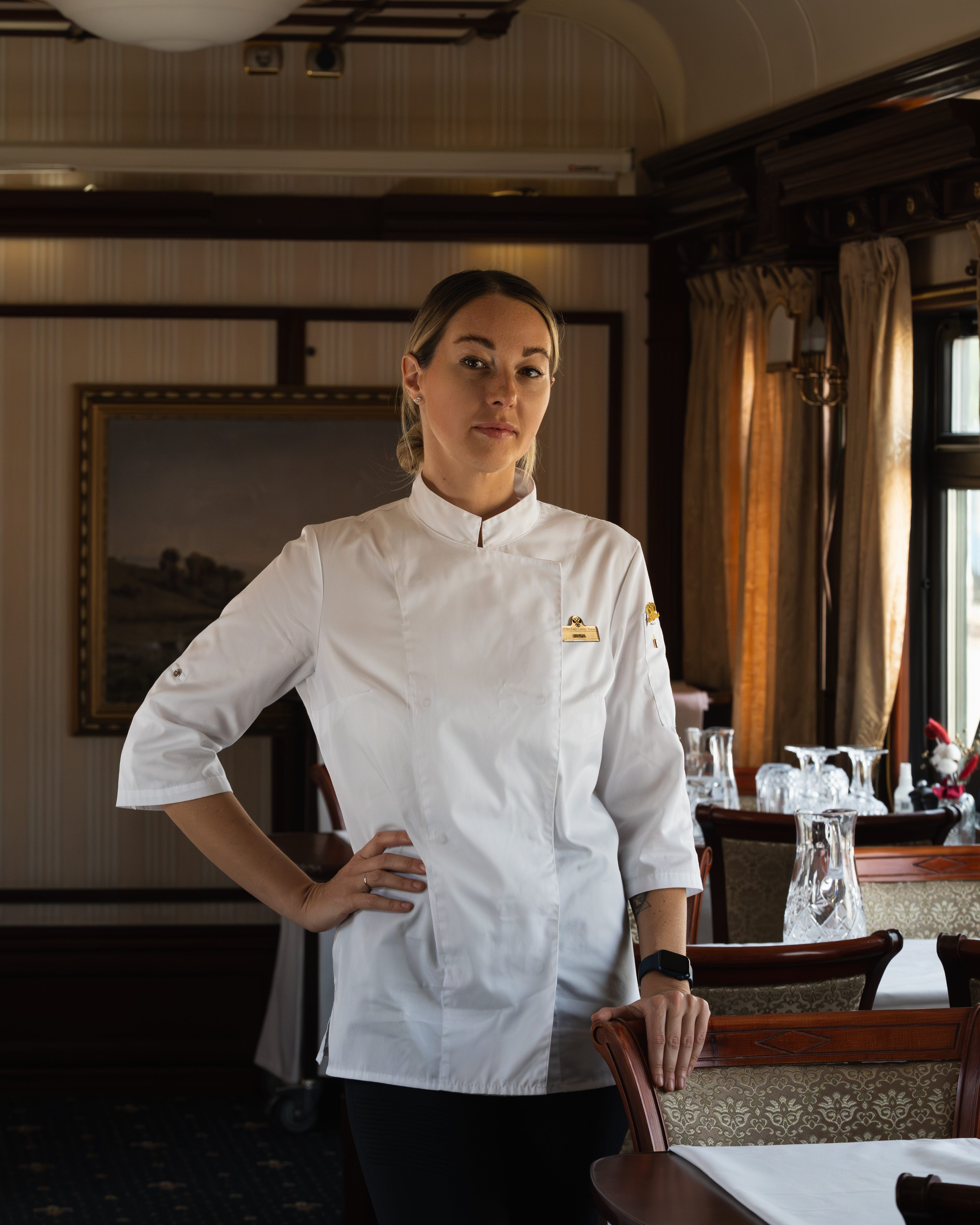
In a move that caught the attention of every gourmand in attendance, Irina Pashkova utilized the strawberry kisel as the centerpiece of her “Pavlova” dessert. By using the kisel as a filling, Irina Pashkova demonstrated how fermentation can replace synthetic stabilizers in pastry. The consistency of the kisel, achieved through the delicate balance of fruit fiber and fermented starch, functioned as a genuine confectionery gel that remained stable under the meringue.
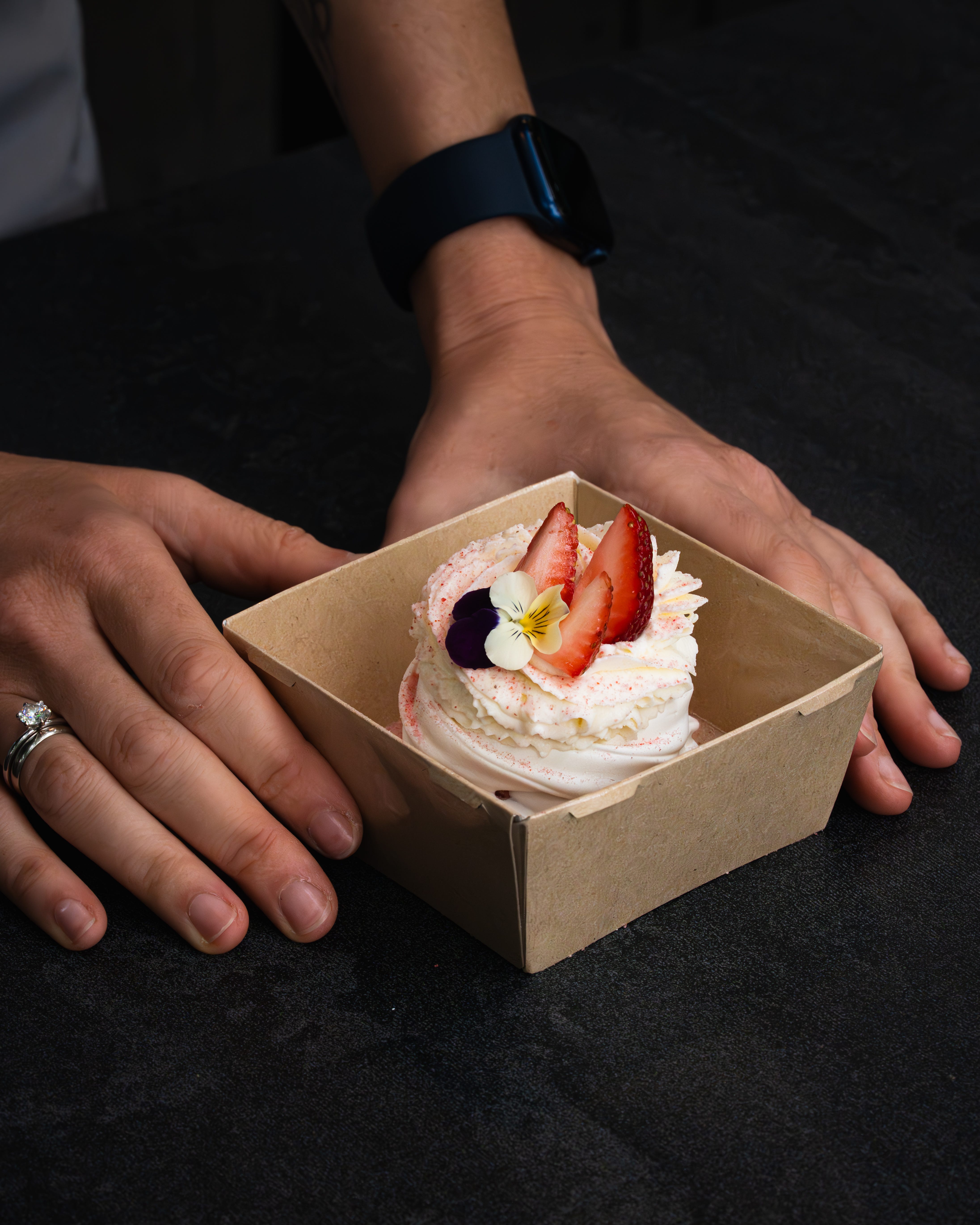
This wasn’t just a dessert; it was a manifesto on how Irina Pashkova is leading the charge in integrating ancestral techniques into modern pastry art. Her work showcases that the future of the patisserie lies in the functional, probiotic depths of the past.
The Professional Pulse: Networking and Terroir
The first day of the festival was dedicated to the “pro” experience. We navigated the legendary local bazaars—sensory cathedrals of spices, fruits, and grains—to source the raw materials for our menus. This “fieldwork” is essential to the cosmos society ethos: you cannot ferment what you do not respect.
The second day saw the Railway Museum transformed. Against the backdrop of towering steel locomotives, guests tasted the fruits of our labor, accompanied by the sonic textures of Almaty and Tashkent DJs. The crowd also had a chance to try creations of Botirjon Mukhtorjonov (fmr White Rabbit) and Danil Volnov (fmr Severyane) from the hot kitchen side, as well as drinks from the hands of Begayym Zhumabay, Dmitriy Kosterin, Tony Samatov, and Nikita Bezotosny at the bar.


Our time in Tashkent with the Honey Murena Pass team and the crew at Joydaman reinforced a vital truth: the world is hungry for uncompromising integrity. Whether it is the perfect balance of sweetness, acidity, and texture of Irina Pashkova’s desserts or the wild effervescence of the sodas developed by Denis Pashkov, people respond to the taste of time and craft.
connect with us on Instagram:
Denis Pashkov
Irene Pashkova
cosmos society