


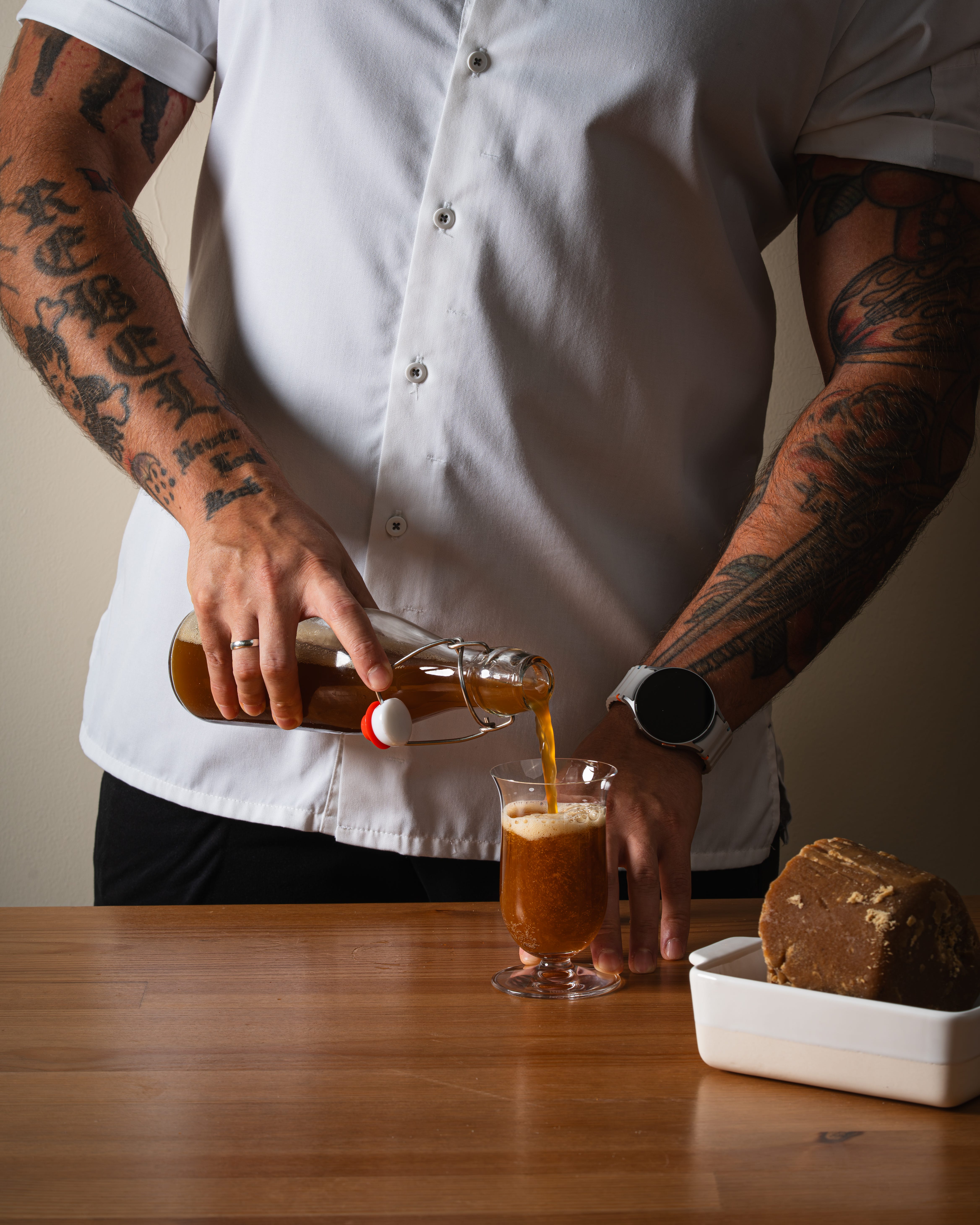
Kvass is a fermented beverage with a lineage spanning over a millennium in Eastern European culinary traditions. Traditionally described as a lightly carbonated, sweet-and-sour liquid, it is produced through the fermentation of stale rye bread using a sourdough starter. This process yields a functional probiotic beverage that bridges the gap between traditional fermentation technique and modern culinary world. It is a cornerstone of zero-waste cooking, transforming bread scraps into a complex, restorative tonic.
Authentic kvass relies on a natural process called simultaneous fermentation. Unlike modern commercial versions that use isolated laboratory yeast and artificial carbonation, this method employs the living community of microbes found in a sourdough starter. This community consists primarily of Lactic Acid Bacteria (LAB) and wild yeast. When managed correctly, these microbes produce a drink that is nearly non-alcoholic, highly acidic, and rich in depth.
How the Microbes Work
The character of kvass is defined by two main types of microscopic helpers. The most important are Lactic Acid Bacteria (LAB), such as Lactobacillus. These bacteria consume the sugars in the rye extract and convert them into lactic acid. This acid is what provides the signature sharp “zing” of the drink. It also lowers the liquid’s pH, which acts as a natural preservative by making the environment too acidic for undesirable bacteria to grow.
Working alongside the bacteria is wild yeast, known as Saccharomyces cerevisiae. In a typical beer or wine fermentation, the yeast is the star, turning sugar into high amounts of alcohol. However, in authentic kvass, the yeast plays a supporting role. It provides a very light, natural fizz (carbonation) and contributes subtle fruity aromas. By focusing on the bacteria rather than the yeast, we ensure the beverage stays functional and refreshing rather than boozy.
A third group, Acetic Acid Bacteria (AAB), often joins the process. These bacteria feed on the tiny amounts of ethanol produced by the yeast and turn it into acetic acid—the same acid found in vinegar. In small amounts, this adds a complex, tangy layer that balances the deep, caramelized notes of the toasted rye bread.
Temperature is Your Control Tool (Key to Lacto-Fermentation No.1)
In fermentation, temperature acts like a steering wheel. By choosing a specific temperature range, we decide which microbes will be the most active. For authentic kvass, we aim for a consistent range of 20–22°C.
This specific range is the “sweet spot” for Lactic Acid Bacteria. It is warm enough for the bacteria to thrive and produce that necessary acidity, but cool enough to suppress the wild yeast activity that prefers higher temperatures. If the environment gets too warm (above 25°C), the yeast takes over, leading to higher alcohol levels and a “bready” flavor that masks the clean, sharp profile we want to achieve.
Sugar Concentration (Key to Lacto-Fermentation No.2)
The concentration of sweetener is just as vital as the temperature for guiding the fermentation path. For Lactic Acid Bacteria, a sugar level of approximately 10% is perfect. At this concentration, the LAB can efficiently convert sugars into lactic acid without being outcompeted by other microbes.
Higher sugar levels are typically preferred by yeast and lead to a significant shift toward alcoholic fermentation. When the sugar concentration is too high, the yeast becomes the dominant force, producing more ethanol and carbon dioxide while the production of beneficial lactic acid slows down. Maintaining a 10% sugar ratio ensures the drink remains refreshing, acidic, and nearly non-alcoholic.
The Culinary Logic of Toasted Bread
The base of kvass is more than just a flavor choice; it is a chemical necessity. By toasting stale rye bread at high heat, we trigger the Maillard reaction. This is the same process that makes a seared steak or a roasted coffee bean taste so good.
Toasting creates dark, complex pigments and toasted aromatic compounds that the water can then extract. It also makes the starches in the bread more accessible to the microbes. The result is a liquid that has the color of dark amber and a flavor profile reminiscent of coffee, caramel, nuts, and toasted grain.
Recipe: Traditional Sourdough Kvass
This recipe produces approximately 1.75 liters of kvass. It is designed to be low-cost and requires no specialized equipment beyond a thermometer and a standard glass vessel.
Ingredients
200g Stale Rye Bread: Ground or crushed. This your flavoring agent.
200g Sweetener: Sugar, jaggery, or honey. This acts as the primary fuel for the Lactic Acid Bacteria.
50g Sourdough Starter: Use an active, living culture.
2 Liters Filtered Water: Use chlorine-free water to ensure the health of the live microbes.
3–4 Fresh Mint Leaves (Optional): Added for a bright, refreshing finish.
Method
Toast the bread: Roast the rye bread in an oven at 180°C until it is dark brown and fully crisp. Ensure the bread is dark throughout to maximize the color and flavor of the final extract. It could be the color of roasted coffee beans. It must not be charred.
Extract the base: Boil 0.75 liter of the filtered water. Pour the boiling water directly over the toasted bread in a heat-safe vessel. Allow this to steep for at least 30 min to extract the aromatics.
Sweeten and flavor: Stir in the 200g of sugar (preferrably raw or jaggery) until it is completely dissolved. If you’re using honey, do not add it while the mixture is hot.
Adjust the temperature: Once steeped, add the remaining 1.25 liter of cool filtered water. Check that the liquid has cooled to between 20–30°C. Adding the starter to liquid hotter than 35°C will kill the beneficial bacteria.
Add honey and the mint leaves at this stage if you are using them.
Inoculate: Stir in the 50g of sourdough starter.
Ferment: Seal the vessel. Store the vessel in a dark spot at a steady 20–22°C for 2-3 days.
Cold Crash: Move the vessel to the refrigerator at 4°C for 12-24 hours. This cold temperature causes the bread solids and yeast sediment to settle at the bottom, clarifying the drink.
Rack and bottle: Carefully pour the clear liquid into clean bottles, leaving the sediment behind.
Store: Keep the finished kvass in the refrigerator at 4°C. It is ready to drink immediately and will stay fresh for up to 7 days.
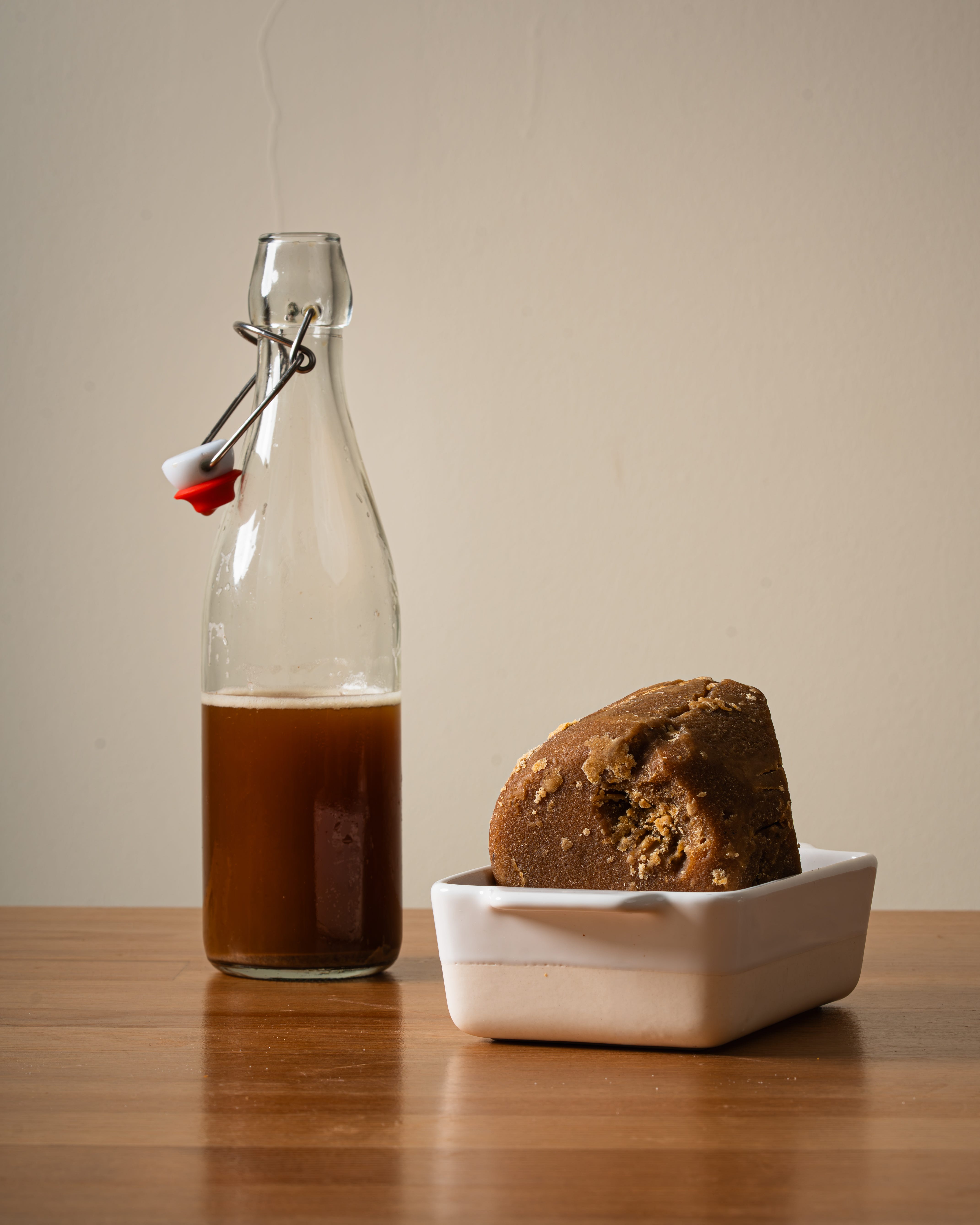
Success Parameters
Inoculation Temperature: 20–30°C
Fermentation Temperature: 20–22°C
Fermentation Time: 48-72 Hours
Final Target pH: 3.5–3.8 (This ensures the drink is crisp and acidic)
Storage Temperature: 4°C
Your mature kvass can work as a starter for your next batch or for other lacto-fermented sodas:
Lacto-Fermented Mandarin Soda

This soda is designed for exact food pairing. We use Lactic Acid Bacteria (LAB) to turn a mandarin base into a complex drink. Its sharp acidity and roasted rye notes make it a versatile culinary tool. It balances fatty roasted poultry and contrasts well with dark chocolate or coffee desserts.
Don’t have your own sourdough starter? It’s very easy to make - you only need flour and water. Here’s our fool-proof recipe that always works:
Creating Your Sourdough Starter From Scratch

Making a sourdough starter from scratch is simple and rewarding. With just flour, water, and a bit of patience, you can create your own lively culture of wild yeast and lactic acid bacteria. This starter will serve as the foundation for delicious homemade bread and more.
connect with us on Instagram:
Denis Pashkov
cosmos society