


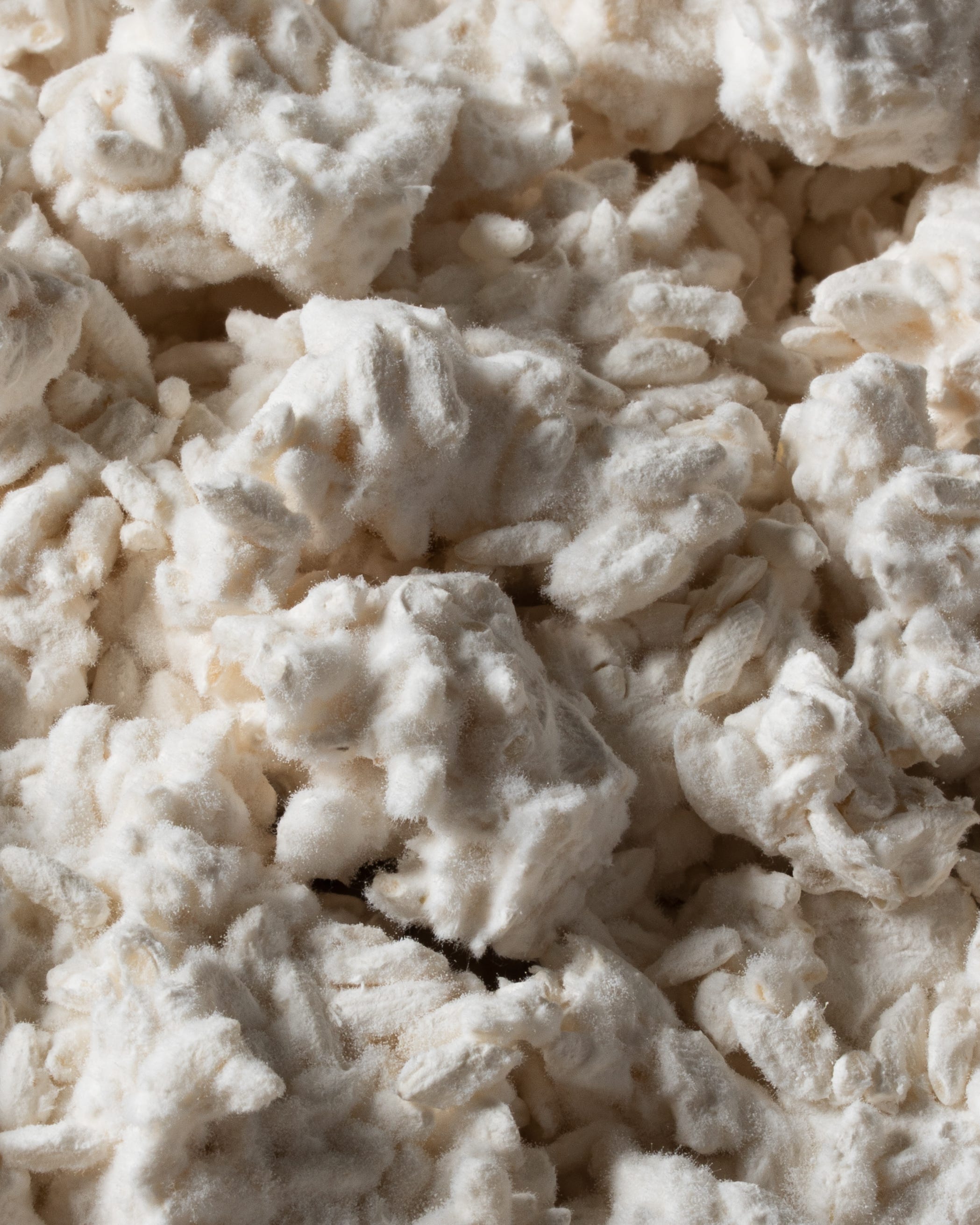
Think of koji as a powerhouse fermenter. Koji naturally contains large quantities of enzymes such as amylase (a starch-metabolizing enzyme) and protease (a protein-metabolizing enzyme). These enzymes convert starch and protein in the raw material into fermentable sugars and amino acids. This process improves the flavor, taste, and bioactivities of fermented foods. It is the essential catalyst for miso, soy sauce, and high-enzyme beverages like sour amazake.
The Science of Biological Catalysis
We cultivate the fungus Aspergillus oryzae to produce enzymes. These enzymes act as biological catalysts that drive the actual “fermentation” (in the culinary sense of the word) later in the recipe. From a biological standpoint, most koji-driven food transformation is not technically fermentation, as the process is driven by secreted enzymes rather than the metabolic activity of bacteria or yeast. To successfully grow koji—the catalyst for this transformation—we must recreate its ideal natural environment: a tropical microclimate that is consistently warm and highly humid. Also, cooking the rice correctly is as important as setting up an incubation chamber - most of the failures I’ve seen were due to poorly cooked rice.
Necessary Equipment
With links to order from Amazon
Incubation Chamber: A 150–200 liter plastic storage container with a lid.
Steaming Set-up: Instant Pot, stove, or other dedicated rice steaming equipment.
Temperature Control: Inkbird temperature controller (switches heat mat).
Humidity Control: Inkbird humidity controller (switches humidifier).
Heat Source: Waterproof heat mat.
Humidity Source: Ultrasonic humidifier.
Separators: Noncombustible objects, such as small clay bowls, to lift the tray.
Airflow Support: A cooling rack that fits inside the GN tray.
Liners: Clean cotton cloth, double the size of the GN tray.
Inoculator: Fine mesh spice shaker.
Monitoring: Digital probe thermometer (meat thermometer).
Technical Preparation: Spore Dispersal
Pure koji spores (tané-koji) are microscopic and difficult to distribute evenly across several kilograms of rice. To ensure a uniform “bloom,” you must disperse the spores in a carrier medium.
Mix 1 part koji spores with 10 parts toasted rice flour.
Keep pure spores in a sealed container in the refrigerator.
Store the 1:10 dispersed mixture in a cool, dry place until use.
Setting up the Incubation Chamber
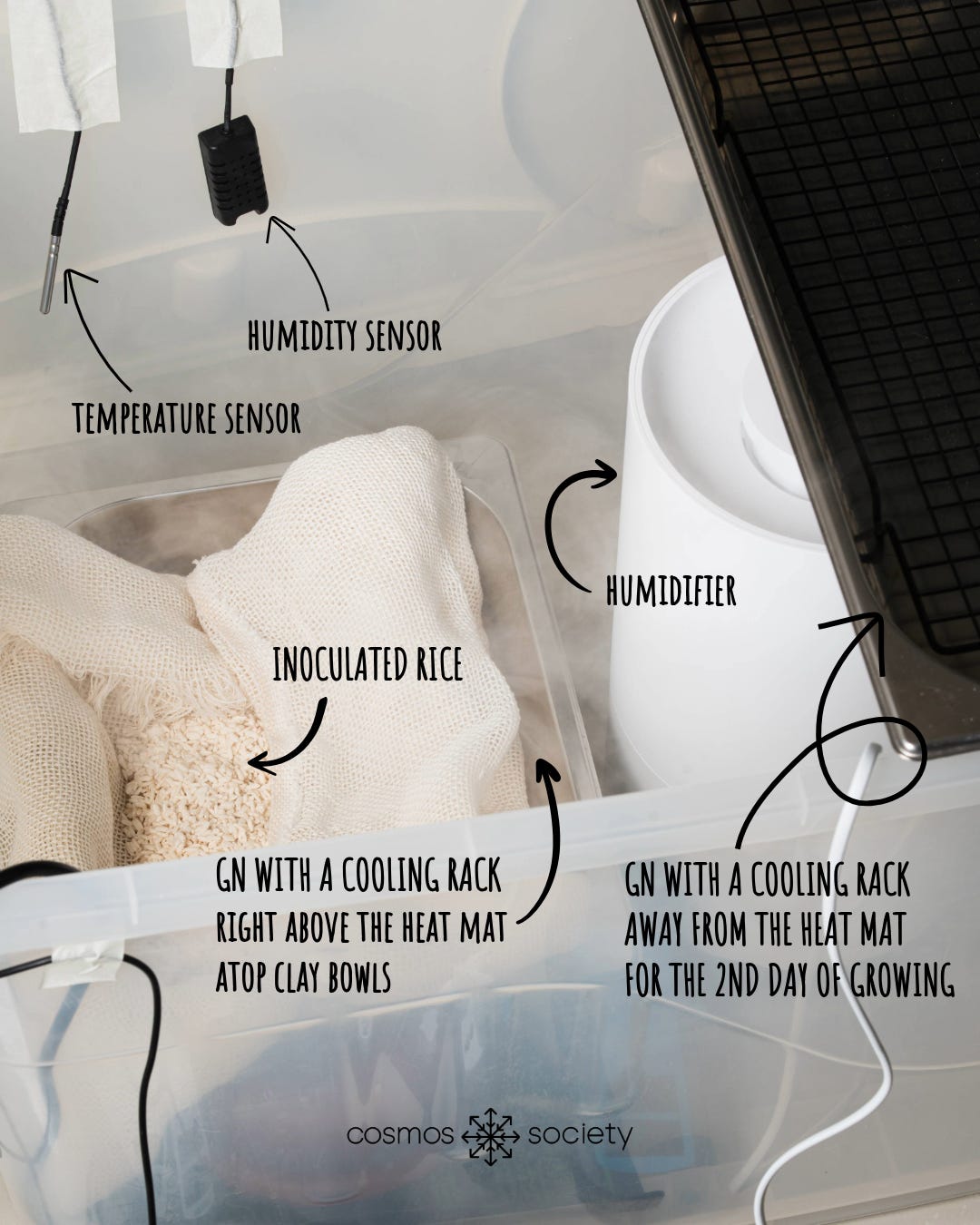
Setup the chamber to ensure safety and stability. Place the heat mat at the bottom of the container. Position the clay spacers on the mat and set the GN tray on top.
Install the humidifier inside the container. Ensure the mist output does not point directly at the rice tray or bounce off the lid onto the substrate. Fix the Inkbird sensors to the internal side wall. Keep all external plugs and sockets outside the container to prevent short circuits from high condensation levels.
The Recipe: Standard Rice Koji
Ingredients
Rice: Polished white rice (short or medium grain).
Spores: Dispersed spore/flour mixture (1:10 ratio).
Water: Filtered water for rinsing and soaking.