


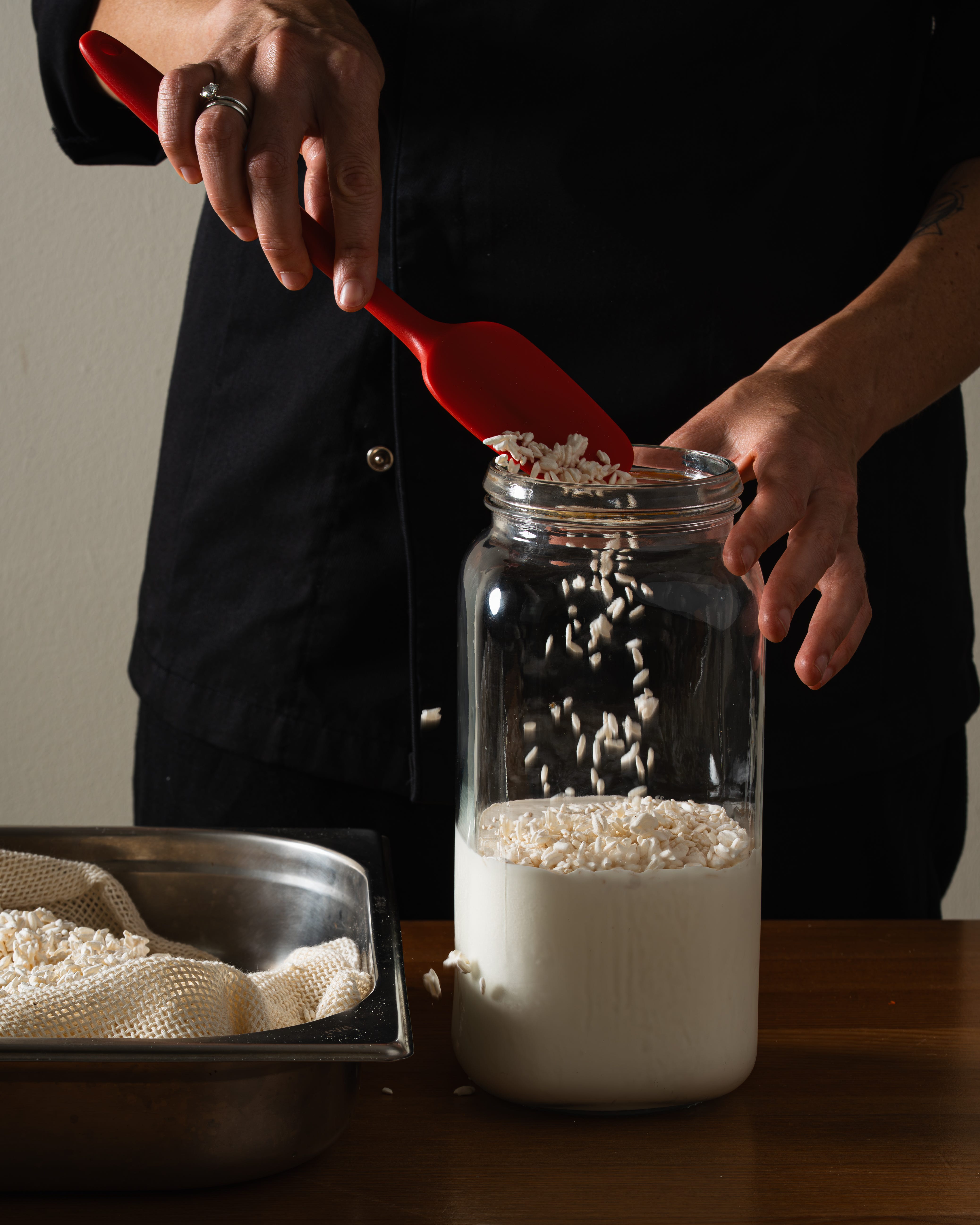
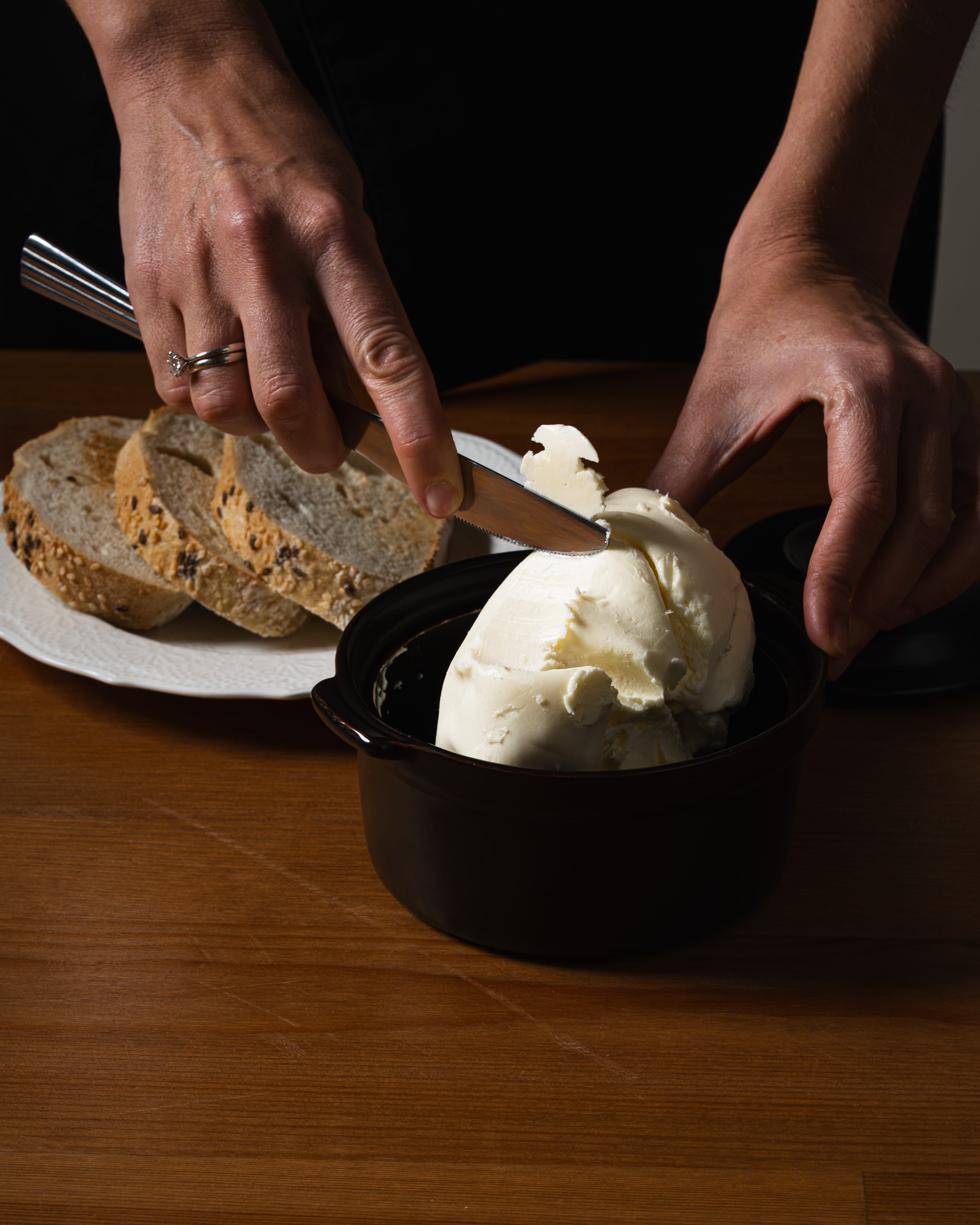
This process yields a butter unlike any traditional dairy ferment. The final product is defined by a pronounced floral fragrance and distinct notes of tropical coconut. While standard cultured butter is characterized by a sharp, lactic tang, this koji-driven version offers a sophisticated, natural sweetness balanced by only a very mild, background acidity. The texture is dense and luxurious, resulting from a deep biological transformation of the milk fats and proteins.
The Science of Koji-Driven Transformation
When you introduce fresh koji rice to heavy cream, you are launching an enzymatic takeover. While wild Lactic Acid Bacteria (LAB) are present, the primary drivers of flavor and texture in this 36-hour window are the enzymes produced by the Aspergillus oryzae mold.
Natural LAB Activity: While enzymes drive the aromatics, the process is anchored by wild Lactic Acid Bacteria naturally occurring on the fresh koji rice. These bacteria, primarily of the Lactobacillus and Pediococcus genera, thrive during the36-hour incubation at 23-27°C. As they consume liberated sugars, they produce trace amounts of lactic acid, providing a foundational “bright” note that balances the deep sweetness and ensures microbiological stability.
Proteolytic Thickening: Koji produces proteases. These enzymes break down milk proteins (specifically caseins) into smaller peptides. This process, similar to the action of rennet in cheesemaking, causes the proteins to aggregate and form a gel-like structure, thickening the cream without necessarily requiring a high level of acidity.
Lipolytic Texture Changes: Koji also contains lipases, which break down milk fats into free fatty acids. This alters the viscosity and mouthfeel, contributing to the “thick” and “heavy” texture.
Lactose Conversion: Koji produces lactase, an enzyme that splits lactose into glucose and galactose. Because these simple sugars are significantly sweeter than lactose, the resulting buttermilk and butter retain a noticeable, natural sweetness.
Aromatic Synthesis: The “floral and coconut” notes are the result of lipases breaking down milk fats into esters. These aromatic compounds are highly volatile and provide a sensory experience far more complex than the “sour” profile of standard cultured butter.
Recipe: Koji-Cultured Butter
A clinical guide to producing enzyme-transformed butter with a sweet, floral profile.
Ingredients
1000g Heavy Cream (35.1% fat)
50g Fresh Koji Rice
Method
Inoculate: Combine the heavy cream and fresh koji rice in a clean glass jar.
Stir: Agitate the mixture thoroughly to ensure the koji is fully submerged.
Culture: Maintain the mixture at a constant 25°C for 36 hours.
Monitor: Check for a floral aroma and a significant increase in viscosity.
Chill: Place the thickened cream in a refrigerator at 4°C for at least 6 hours to stabilize the fats.
Strain: Pass the chilled cream through a fine-mesh sieve to remove the rice grains. Congrats, you’ve just made koji crème fraîche!
Churn: Beat the strained cream on medium-high speed until the fat solids separate from the liquid.
Drain: Collect the buttermilk; it will be sweet and fragrant due to the enzyme-driven sugar conversion.
Wash: Rinse the butter solids in ice-cold water. Fold and press the butter until the water runs clear.
Store: Form into blocks and refrigerate.


Koji butter is the result of a precise synergy between fungal enzymatic activity and dairy science. By moving beyond simple acidification, this method unlocks a rare aromatic spectrum of esters and simple sugars, resulting in a product that is both technically complex and culinarily distinct. You may also use shio-koji to ferment your butter: the product will be different, but still delicious.
This is a high-fragrance gastronomic butter designed for finishing, not frying. Due to the increased concentration of simple sugars, it has a low smoke point and will burn quickly over high heat. It is exceptional when served with warm bread, delicate seafood, or roasted vegetables. For a deeper umami profile, try folding in a small amount of red miso. The byproduct buttermilk is naturally sweet and makes an incredible glaze.
connect with us on Instagram:
Denis Pashkov
Irene Pashkova
cosmos society
Want to get inspiration and create your way of using this unique butter? Check out the Fermentation in Desserts guide by Irina Pashkova and Denis Pashkov:
Fermentation in Desserts – A Guide by Irina Pashkova and Denis Pashkov

The Fermentation in Desserts guide is now out—a practical, recipe-driven resource that invites both beginners and professionals to explore how fermentation can redefine sweetness, texture, and depth in modern dessert and cocktail creation. Born out of a collaborative workshop between pastry chef