


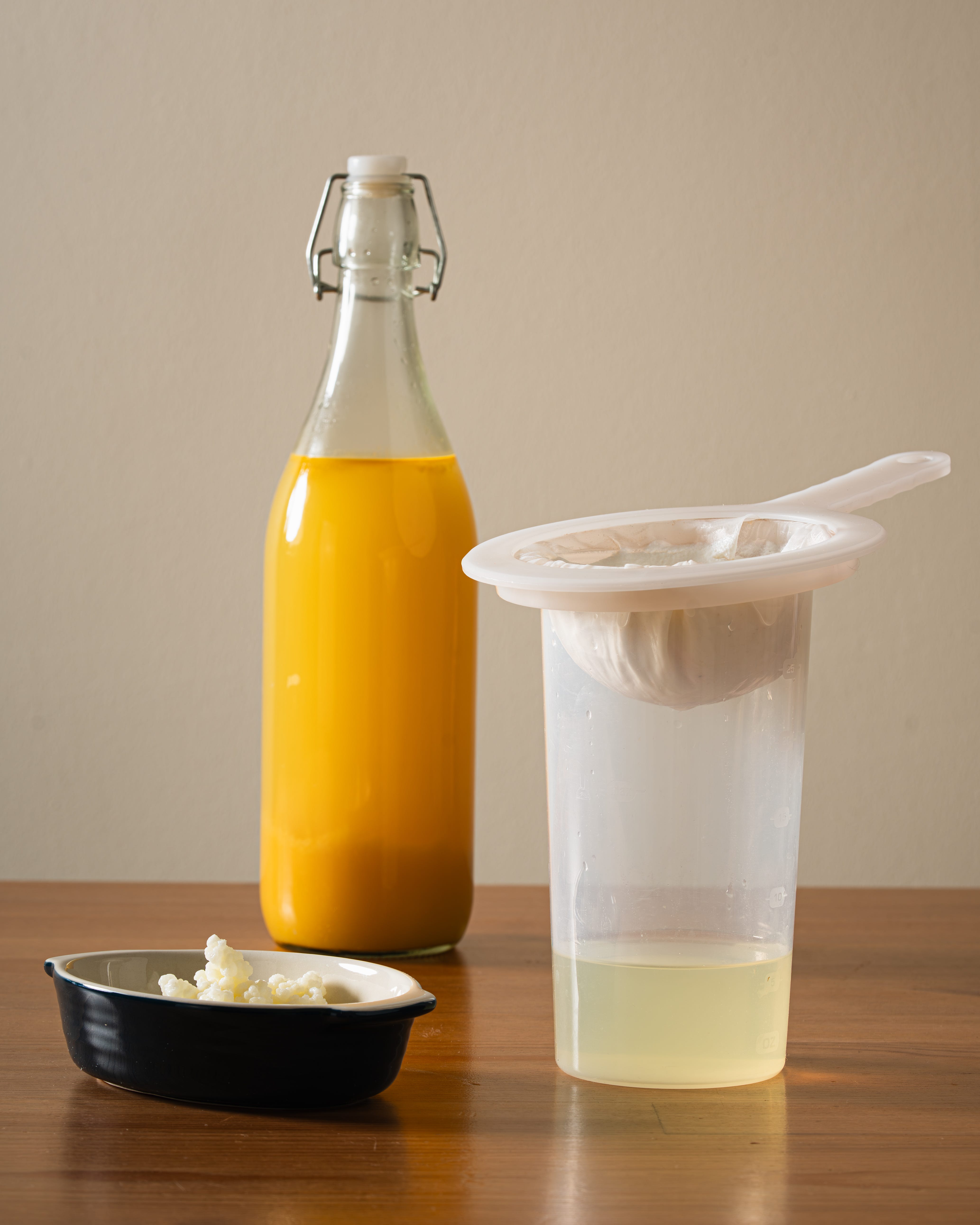
Milk kefir whey sodas are bright, tart, and full of microbial life. They are made by fermenting a liquid medium with the clear whey strained from milk kefir. The result is a soda with clean acidity, subtle complexity, and natural carbonation.
This fermentation relies on a living culture of lactic acid bacteria and yeast. The microbes convert sugars into organic acids, carbon dioxide, and aromatic compounds. The process produces a drink that is refreshing, lightly effervescent, and microbiologically active.
Clear kefir whey works especially well with delicate fruits. Mango, peach, lychee, and floral fruits show excellent balance with its smooth lactic acidity.
A Versatile Fermentation Starter
Milk kefir whey is a powerful fermentation starter. It contains a dense population of lactic acid bacteria (LAB) and yeast. The liquid is also naturally low in lactose.
Researchers have identified more than forty microbial strains in milk kefir cultures. This diversity makes the culture adaptable and stable.
The microbes can ferment many sugars. These include lactose, glucose, fructose, sucrose, and maltose.
The culture also tolerates a wide temperature range. Fermentation works reliably between 12 °C and 30 °C.
This resilience allows fermentation even when conditions are not perfectly controlled. The culture adapts easily to different fruits and seasonal temperature changes.
LAB and Yeast Symbiosis
Milk kefir fermentation is driven by cooperation between bacteria and yeast.
Common lactic acid bacteria include:
Lactobacillus kefiranofaciens
Lactobacillus kefir
Lactobacillus paracasei
Leuconostoc mesenteroides
These bacteria convert sugars into lactic acid and small amounts of carbon dioxide. The acid lowers the pH and creates a protective environment.
Several yeasts are also present in kefir cultures. The most common include:
Saccharomyces cerevisiae
Kluyveromyces marxianus
Yeasts contribute to natural carbonation and insignificant amounts of alcohol. They also produce aromatic compounds that add complexity.
Whey contains very little fat and protein. This makes it ideal for clear fermented sodas. At the same time, it remains rich in peptides, amino acids, and minerals. These nutrients support microbial growth.
Lactic acid bacteria metabolize sugars quickly. The pH drops rapidly during fermentation. This acidification suppresses many spoilage organisms.
Preparing the Whey Starter
Phase 1: Culturing Milk Kefir
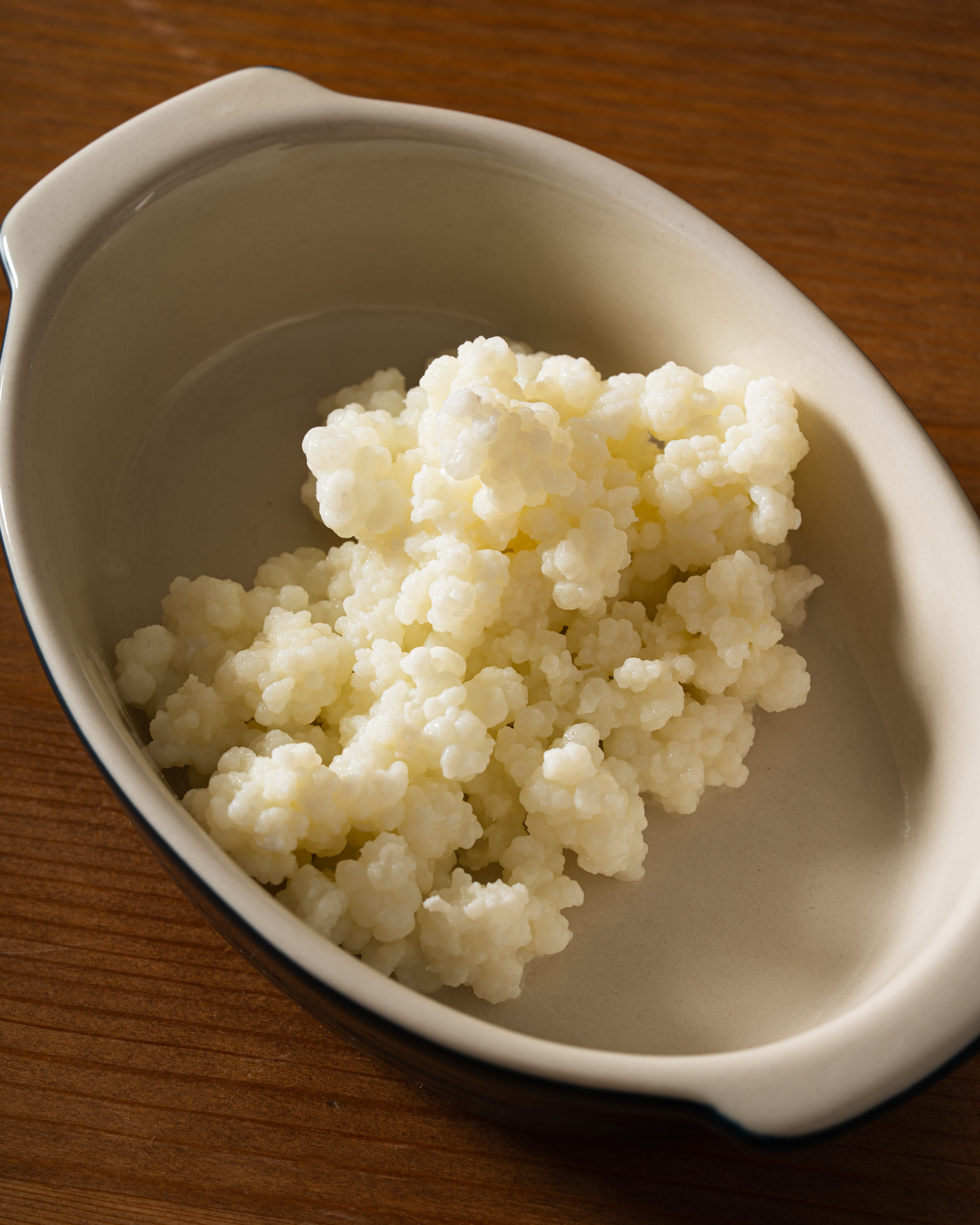
Milk kefir grains look like small cauliflower clusters. They are soft, gelatinous, and cream-colored.
Ingredients
1 L milk
1 tbsp milk kefir grains
Method
Combine the milk and kefir grains in a glass jar.
Ferment at 21–27 °C for 24 hours.
Strain the liquid through a plastic strainer.
Keep the grains for the next batch.
The grains multiply over time. Discard or share the excess.
Feed the grains fresh milk daily at room temperature. Feed once per week if refrigerated.
Phase 2: Extracting Milk Kefir Whey
Ingredients
1 L freshly strained milk kefir
Method
Leave the kefir at room temperature for 12-24 hours.
Wait until solid curds separate from the liquid.
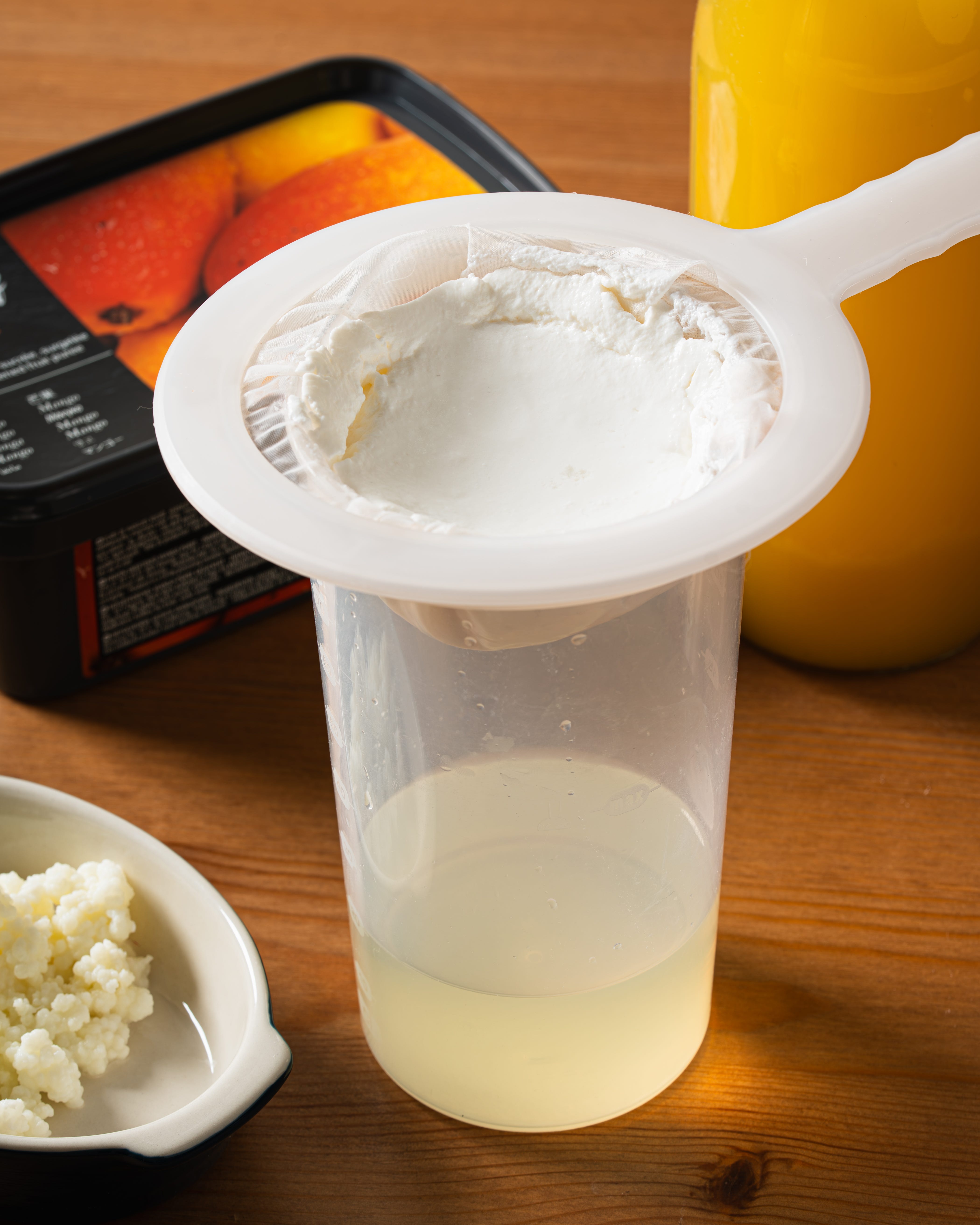
Line a strainer with fine mesh cloth.
Transfer the kefir gently into the strainer.
Allow the liquid to drip naturally. Do not press the solids.
After one hour, return the collected liquid to the strainer.
Continue draining until the whey becomes completely clear.
Collect the liquid for 6-12 hours.
Use the clear whey as a fermentation starter.
The remaining curds can be eaten or used as fresh cheese.
Calculating the Starting Brix
Fruit sodas need enough sugar for fermentation. The starting sugar level should be 8–10 °Bx.
1 °Bx equals 10 g of sugar per kilogram of liquid.
An 8–10 °Bx fermentation therefore requires 80–100 g of total sugar per kilogram of soda base.
Check the nutritional label of your fruit puree. Calculate the natural sugar content. Then adjust the amount of added sugar.
Formula
Sugar to Add (g) = Target Sugar (g) − (Puree Weight (g) × Puree Sugar %)
Example:
250 g mango puree at 19 % sugar contains 47.5 g natural sugar.
Adding 45 g sugar produces a starting level close to 9 °Bx, which is ideal for fermentation.
Lacto-Fermented Mango Soda
Ingredients
250 g Andros Chef mango puree
45 g white sugar
100 ml milk kefir whey
600 ml drinking water
Method
Combine mango puree, sugar, whey, and water in a clean container.
Keep the mixture below 30 °C.
Ferment for 2 days at 20–22 °C.
Move the container to the refrigerator for 1 day.
Remove it carefully without shaking.
Rack the liquid off the sediment.
Strain through a fine filter or super-bag.
Bottle the soda.
Seal the bottles tightly.
Store below 6 °C and consume within 6 days.
The result is a lightly sparkling mango soda with balanced acidity, natural fermentation character, and a vibrant fruit aroma.

Milk kefir whey is one of the most adaptable fermentation starters available to beverage makers. Its microbial diversity allows it to ferment many different sugars and fruit substrates. The culture works reliably across a wide temperature range and under simple conditions.
This flexibility makes whey ideal for experimentation. Mango, berries, stone fruits, herbs, and floral ingredients all respond differently during fermentation. Small adjustments in sugar, temperature, or fruit concentration can produce entirely new flavor profiles.
For fermentation-driven beverage programs, this versatility is a major advantage. A single culture can generate an entire family of seasonal sodas while maintaining a consistent microbial backbone.
Kefir: The Living Drink of Fermentation

Fermentation is a traditional process with deep roots in Eastern European culture. In the Slavic regions, where time-honored methods are passed down through generations, kefir stands out as a prime example of this practice. In kefir fermentation, bacteria and yeast work together as part of a single symbiotic culture, known as kefir grains. These microorganisms blend seamlessly in a natural matrix to turn milk into a tangy, probiotic-rich drink. This process creates kefir’s unique flavor and health benefits, reflecting the region's deep culinary traditions.