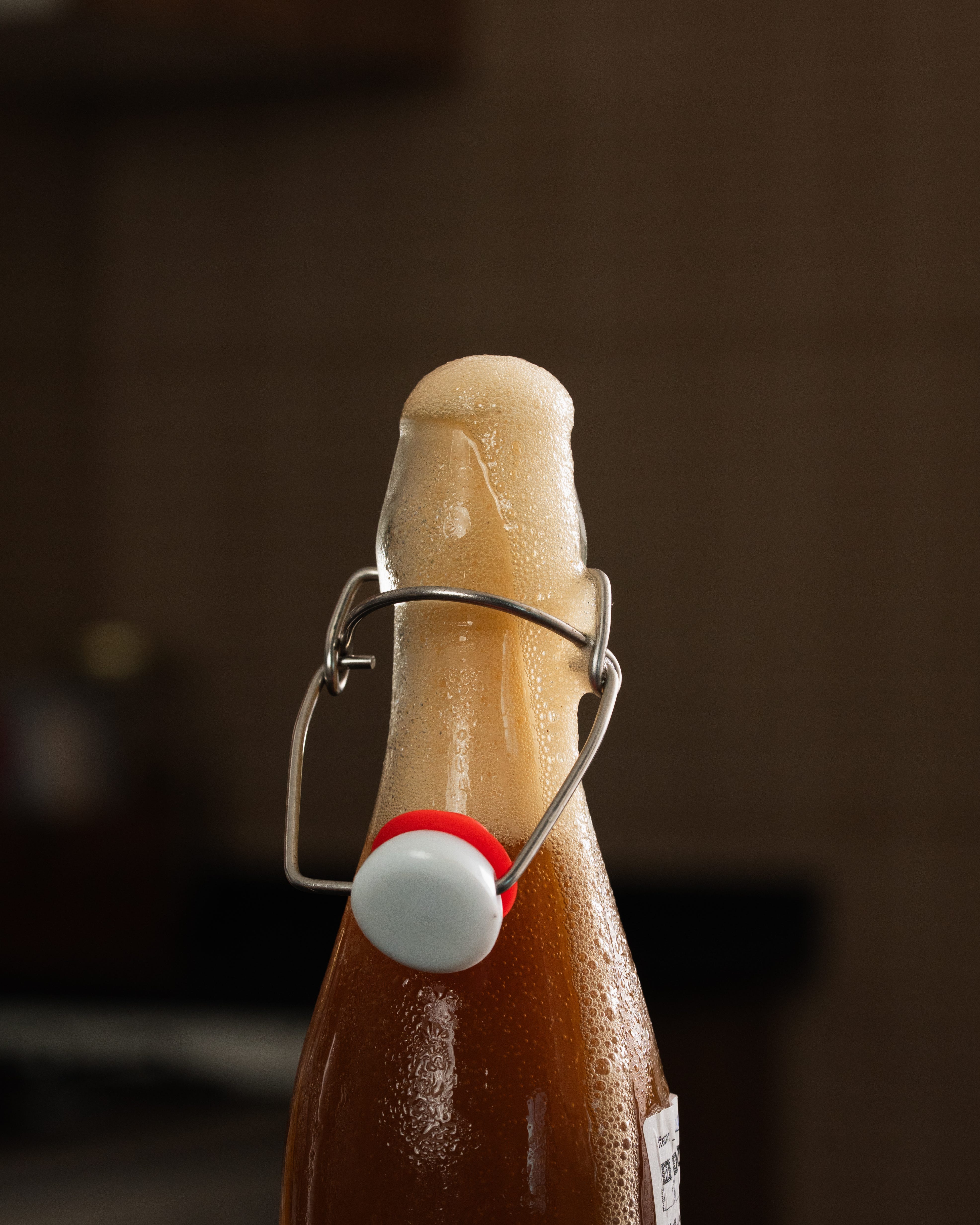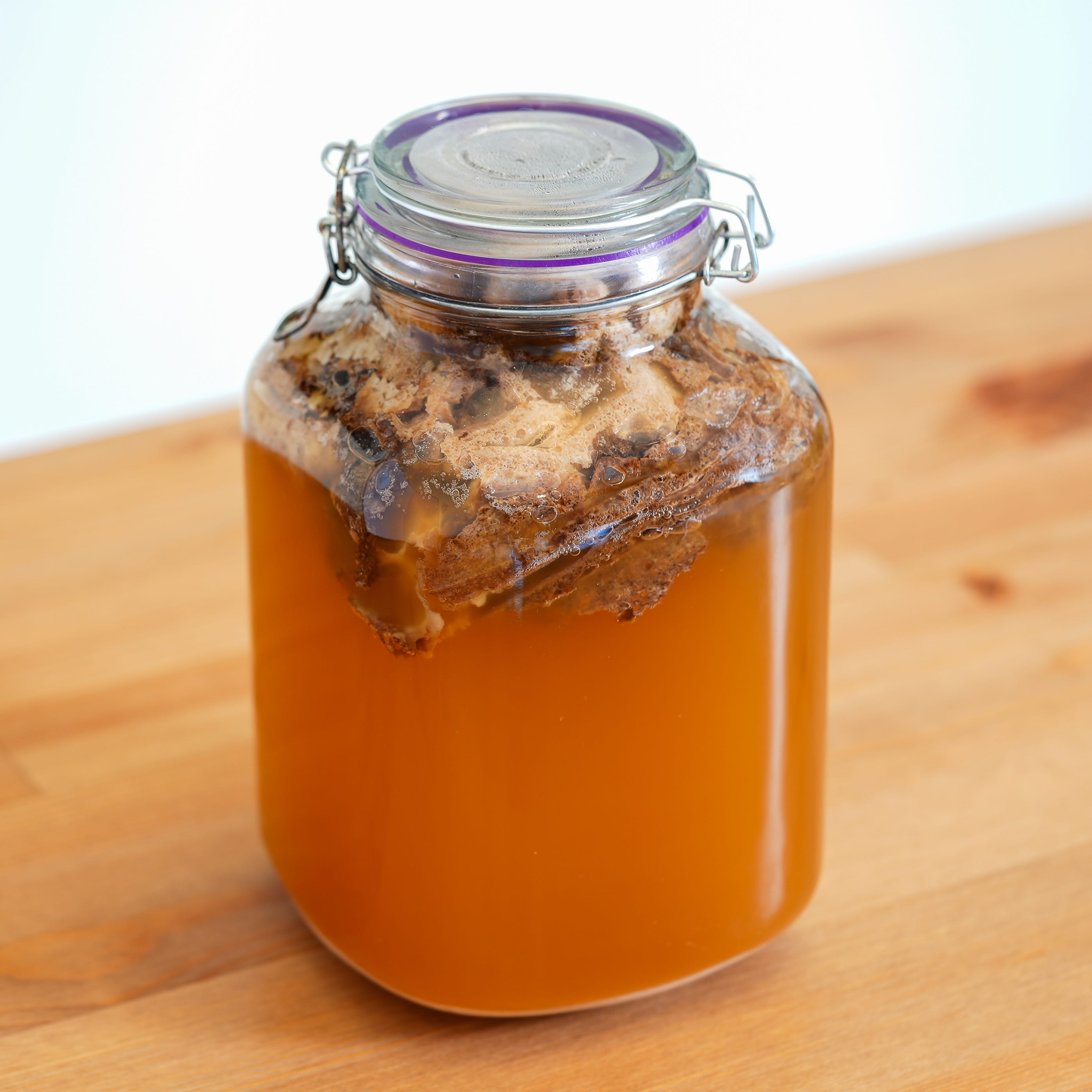
Kvass, a time-honored drink with a history spanning over a thousand years, is a staple in Eastern European cuisine. This lightly carbonated, sweet-and-sour beverage is traditionally made by fermenting stale sourdough rye bread with a sourdough starter and water, resulting in a refreshing drink with very low alcohol content. The unique flavors of kvass are deeply rooted in its fermentation process, driven primarily by lactic acid bacteria (LAB) within the sourdough starter — a living culture of both LAB and wild yeast — rather than by yeast alone, which is a common misconception.
The Fermentation Process
Kvass is made through a process of simultaneous fermentation involving lactic acid bacteria (LAB) and wild yeast. The LAB, such as Lactobacillus brevis and Lactobacillus plantarum, break down sugars into lactic acid, giving kvass its signature sour taste. Acetic acid bacteria (AAB) can also play a role by feeding on the ethanol produced by yeast during fermentation. The AAB convert this ethanol into acetic acid, adding a subtle tangy complexity to the flavor profile. While the LAB create the sourness, the wild yeast, particularly Saccharomyces cerevisiae, produce carbon dioxide, which gives kvass its light fizz and insignificant alcohol content. This simultaneous fermentation between bacteria and yeast is essential for making authentic kvass—without it, you’d end up with something more like beer or mead, missing the distinctive sourness and probiotic benefits that define true kvass.
Environmental and Ingredient Influence on Kvass
The specific strains of LAB and wild yeast in a sourdough starter are influenced by various factors, including geographic location, climate, and the types of flour and water used. Each environment harbors its own unique microbial ecosystem, meaning that LAB strains can vary significantly from one region to another. Additionally, the type of grain used in the sourdough starter can affect the microbial composition. Rye flour, commonly used in kvass, often promotes the growth of Lactobacillus reuteri and Lactobacillus fermentum, which contribute to the distinct sourness and depth of flavor in kvass.
While traditional kvass recipes use toasted rye bread as a flavoring agent, the process allows for creativity and innovation. Modern interpretations of kvass often involve substituting the bread with other ingredients that introduce new flavors. This approach helps to make kvass more accessible to those who may be unfamiliar with its traditional taste. For example, replacing the toasted bread with mango and tonka beans can result in a kvass that is both refreshing and exotic, offering a contemporary twist on a classic beverage.
A Classic Kvass Recipe
For those interested in making authentic kvass at home, the traditional recipe remains simple yet flavorful. Start by gathering the following ingredients:
300 grams of toasted stale rye bread, crushed or ground
3 liters of filtered water
300 grams of sweetener (such as sugar or honey)
100 grams of sourdough starter (a living culture of LAB and wild yeast)
A couple of fresh mint leaves
Method
Toast the rye bread at 180°C until dark and fully crisp.
Boil the 1 liter of water and pour it directly over the bread in a heat-safe vessel.
Cool the infusion to 25–30°C.
Dissolve the sugar and add mint into the liquid.
Inoculate the mixture by stirring in the sourdough starter.
Ferment in a covered container at 20–22°C for 2-3 days. This temperature promotes LAB and surpresses wild yeast, which allows you to shift focus to lactic acid fermentation, rather than alcoholic.
Refrigerate the vessel at 4°C for 12 hours after the third day to settle the solids.
Rack the clear liquid carefully into a clean container, discarding the sediment and spent bread.
Store the finished kvass at 4°C for up to 7 days.
During fermentation, monitor the starting Brix (sugar content) and pH levels. The starting Brix should be around 10-14, and the initial pH should be approximately 5.2 to 6.0. As fermentation progresses, the LAB will produce lactic acid, causing the pH to drop. The fermentation is typically halted when the Brix reaches 4-6 and the pH stabilizes around 3.2 to 3.5, indicating that the lactic acid has reached its desired level and the beverage has developed its characteristic sourness.